
Find the source · Updated November 2026
Sewer smell in the house.
Most sewer smells indoors are not the sewer line at all. Start with the cheapest cause, which costs nothing, and work down the list.
 By Andrew HendersonRed Seal Plumber
First, be safe
Open windows and get air moving. If the smell is strong, or anyone feels dizzy, sick or has a headache, leave the house and call for help. If the smell is more like rotten eggs near a gas appliance, treat it as a gas leak: leave, and call FortisBC from outside at 1-800-663-9911.
The six causes
| A dry trap | Every drain has a bend that holds water to block sewer gas. In a floor drain or a fixture nobody uses, that water evaporates. Pour a jug of water down it. This is the cause more often than all the others together. |
|---|---|
| A toilet seal that has failed | The seal between the toilet and the floor can dry out or shift. The smell is at the base of one toilet, and the toilet may rock. |
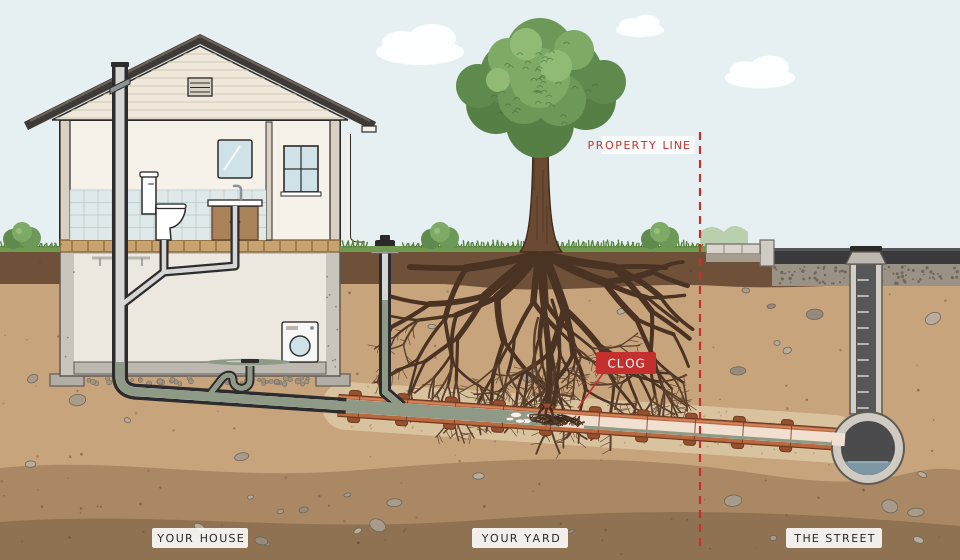
| A loose or missing cleanout cap | A cleanout with no cap, or a cracked one, is an open pipe into the sewer. Look at the caps in the basement and the crawl space. |
| A blocked or broken vent | The vent pipe through the roof lets sewer gas out and air in. If it is blocked, traps get sucked dry and drains gurgle. |
| A cracked drain pipe | A crack in a drain line inside a wall or under the floor lets gas out all the time. The smell stays in one area and does not go away with water. |
| The main line backing up | If the smell comes with slow drains, gurgling or water at the lowest drain, the line is blocked. |
How to tell which one
- Run water into every drain you rarely use, including the basement floor drain, a spare shower and the laundry sink. Give it a day.
- Follow your nose. One fixture points to that fixture. One room points to a pipe or a cleanout. The whole basement points to the floor drain or the main line.
- Watch the drains. If they are slow or gurgling as well, read gurgling and slow drains.
When to call a plumber
- The smell is still there a day after you filled the traps
- It comes with slow drains, gurgling or water at the floor drain
- A toilet rocks, or there is staining around its base
- You can see a cracked pipe or a cleanout with no cap
Questions
Is sewer gas dangerous?
In the small amounts that come from a dry trap it is mostly unpleasant. In a closed space, or in large amounts, it can make people sick. Ventilate, and leave the house if anyone feels unwell.
Why does it smell worse when it rains?
Rain raises the flow in the sewers and pushes air through the system, so any open path into the house smells stronger. It often points to a dry trap or a missing cleanout cap.
How often should I top up a floor drain?
A cup or two of water every month or so keeps a rarely used trap full.
More sewer line help
This page is general information, not professional advice for your situation. If you are unsure at any point, stop and call a licensed plumber. See the legal disclaimer.